Positive Impacts of Computer Technology on the Environment
How technology is helping us monitor, model, and mitigate the global climate crisis.
1. Real-Time Environmental Monitoring
Digital devices provide crucial data on environmental shifts via sensors and satellites, which is essential for protecting the environment and combating climate change [1].
Lake Urmia: A Visual Example of Environmental Change
Lake Urmia in Iran was once one of the largest hypersaline lakes in the world. Use the slider to compare satellite images showing the lake when it was filled (June 2021) versus when it had dried significantly (November 2021) [2]. This demonstrates how digital monitoring documents climate shifts.
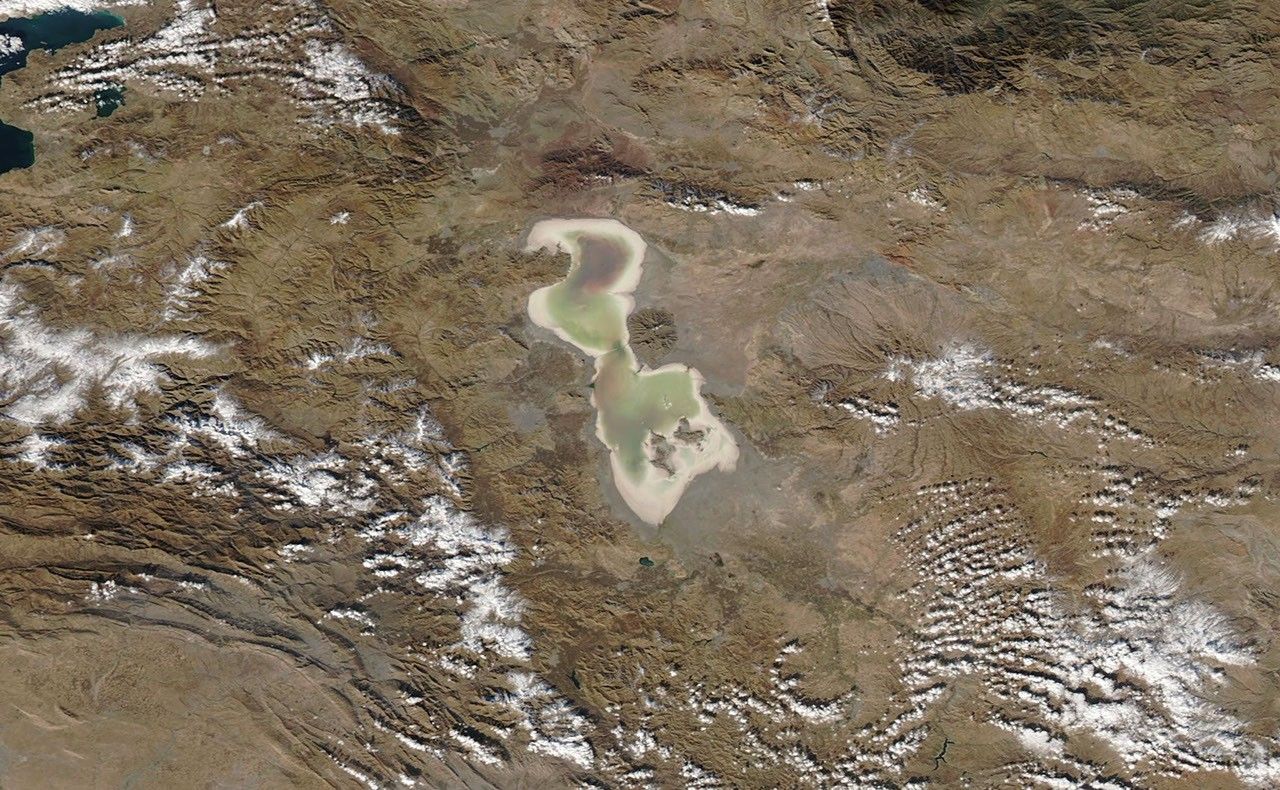
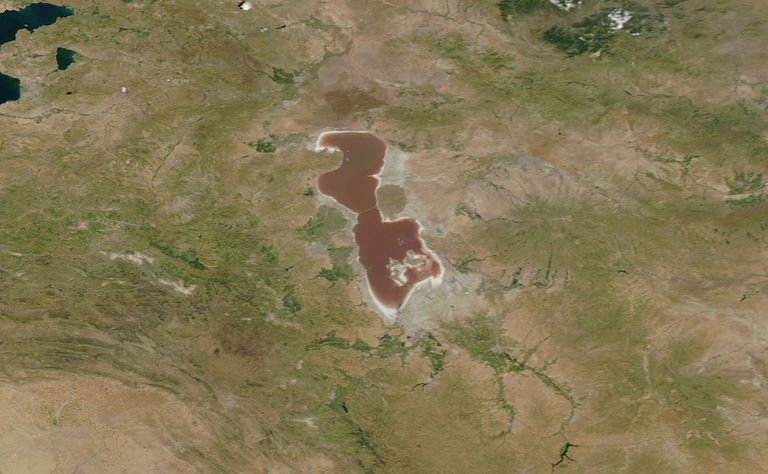
Source: NASA Earth Observatory [2]. View original source
2. Advanced Climate Modeling & Simulation
The predictive power of computer simulations has increased as digital technology becomes ever more sophisticated. Simulations provide increasingly accurate assessments that can inform major policy decisions. Forecasting techniques have advanced from simple predictions to "hybrid" and "quantum" models using Artificial Intelligence (AI), that can handle the massive complexity of the Earth's weather systems [3], [4].
Hybrid AI Forecasting
In April 2026, Canada launched a hybrid weather model that combines traditional physics with AI. This allows for predicting major systems (like heat waves or atmospheric rivers) "from 8 to over 24 hours earlier" than before [3].
Quantum AI Integration
Researchers at University College London (UCL) have shown that blending quantum computing with AI can improve long-term predictions of complex systems, including the global climate [4].
Climate Spiral Visualization
The climate spiral is a powerful visualization showing global temperature anomalies from 1880 to the present [5]. This animated representation makes complex climate data accessible and understandable for everyone.
Source: NASA Scientific Visualization Studio [5]. Visualization by Mark SubbaRao and Ed Hawkins, using data from NASA GISS [5]. View original source
3. Energy Optimization & Logistics
Algorithms can increase efficiency, thus reducing the carbon footprint of how we move goods and use electricity [6], [7].
Supply Chain Decarbonization
Research from Tunisia has shown that AI-enabled interventions in logistics can reduce fuel consumption by 12-15% and avoid up to 1,500 tons of CO2 emissions annually [6].
Route Optimization
Algorithms solve complex "Vehicle Routing Problems" by processing GPS and traffic data to calculate paths that minimize idling and fuel use [7].
References
- M. J. McCarthy, H. V. Herrero, S. A. Insalaco, Melissa T. Hinten, and Assaf Anyamba, "Satellite remote sensing for environmental sustainable development goals: A review of applications for terrestrial and marine protected areas," Remote Sensing Applications: Society and Environment, vol. 37, Art. no. 101450, Jan. 2025. [Online]. Available: https://doi.org/10.1016/j.rsase.2025.101450
- Earth Science Division Editorial Team, "Drying Lake Urmia, Iran," NASA Science, Feb. 22, 2022. [Online]. Available: https://science.nasa.gov/earth/drying-lake-urmia-iran/
- "Canada to launch hybrid AI weather model to strengthen forecasting for severe weather," Environment and Climate Change Canada, Apr. 9, 2026. [Online]. Available: https://www.canada.ca/en/environment-climate-change/news/2026/04/canada-to-launch-hybrid-ai-weather-model-to-strengthen-forecasting-for-severe-weather.html
- University College London, "Quantum computer improves AI predictions," UCL News, Apr. 17, 2026. [Online]. Available: https://www.ucl.ac.uk/news/2026/apr/quantum-computer-improves-ai-predictions
- M. SubbaRao and E. Hawkins, NASA Climate Spiral 1880-Present, NASA Scientific Visualization Studio, Nov. 15, 2023. [Online]. Available: https://svs.gsfc.nasa.gov/5190/
- M. A. Frikha and M. Mrad, "AI-Driven Supply Chain Decarbonization: Strategies for Sustainable Carbon Reduction," Sustainability, vol. 17, no. 21, Art. no. 9642, Oct. 2025. [Online]. Available: https://doi.org/10.3390/su17219642
- D. Lai, Y. Costa, E. Demir, A. M. Florio, and T. Van Woensel, "The pollution-routing problem with speed optimization and uneven topography," Computers & Operations Research, vol. 164, Art. no. 106557, Apr. 2024. [Online]. Available: https://doi.org/10.1016/j.cor.2024.106557